Back to Camp... The Traditional Camp Advantage
Fri, Sept 5th, 2025
In the ‘real world’ your kid probably already has a label or perceived identity.
Maybe they’re the performing arts kid, or perhaps they’re the jock who spends all their time honing their throwing arm for the football season, or maybe they’re on the swim team, or are getting ready for the next debate contest.
Whatever their ‘thing’ is, I’ve seen all those labels just disappear at camp.
Because at camp, kids can do a lot of different things.
They can play ping pong, shoot hoops, spend time at arts & crafts, ride a horse, sail on the lake, fly down the zip line, or just hang out with their friends.
By the end of summer, kids are just kids who did cool stuff at camp. And that’s what I know matters most.
The Importance of Having Range
David Epstein’s book Range is a great way to think about this, and how camp fits into a world that’s becoming hyper-specialized.
He compares two paths to excellence: Tiger Woods versus Roger Federer.
Tiger started golf at two. Early specialization, intense focus, obviously, became one of the greatest golfers ever.
Federer? Played tennis, skiing, wrestling, basketball, swimming, handball, volleyball, soccer, and badminton well into his teens.
His parents actually forced him to keep playing other sports when he wanted to focus only on running around with a racket.
Epstein hits on something that’s still somewhat counterintuitive: there are way more Federers than Tigers among elite performers.
Most successful people had a “sampling period,” trying tons of things before finding their path.
And Epstein sums it up perfectly with, “Learning stuff was less important than learning about oneself.”
Most of our campers aren’t going to play Division I sports or become professional artists. This isn’t news to most of us.
But more and more, kids are being siloed into specific paths without a chance to range out much beyond their one skillset or core interest.
The Advantage of Traditional Camp
I love sports. I love the competition and camaraderie it brings. I root for Chelsea FC all year long, and even my toddler, Leo, knows that the Blues are his team (no, he didn’t have a choice).
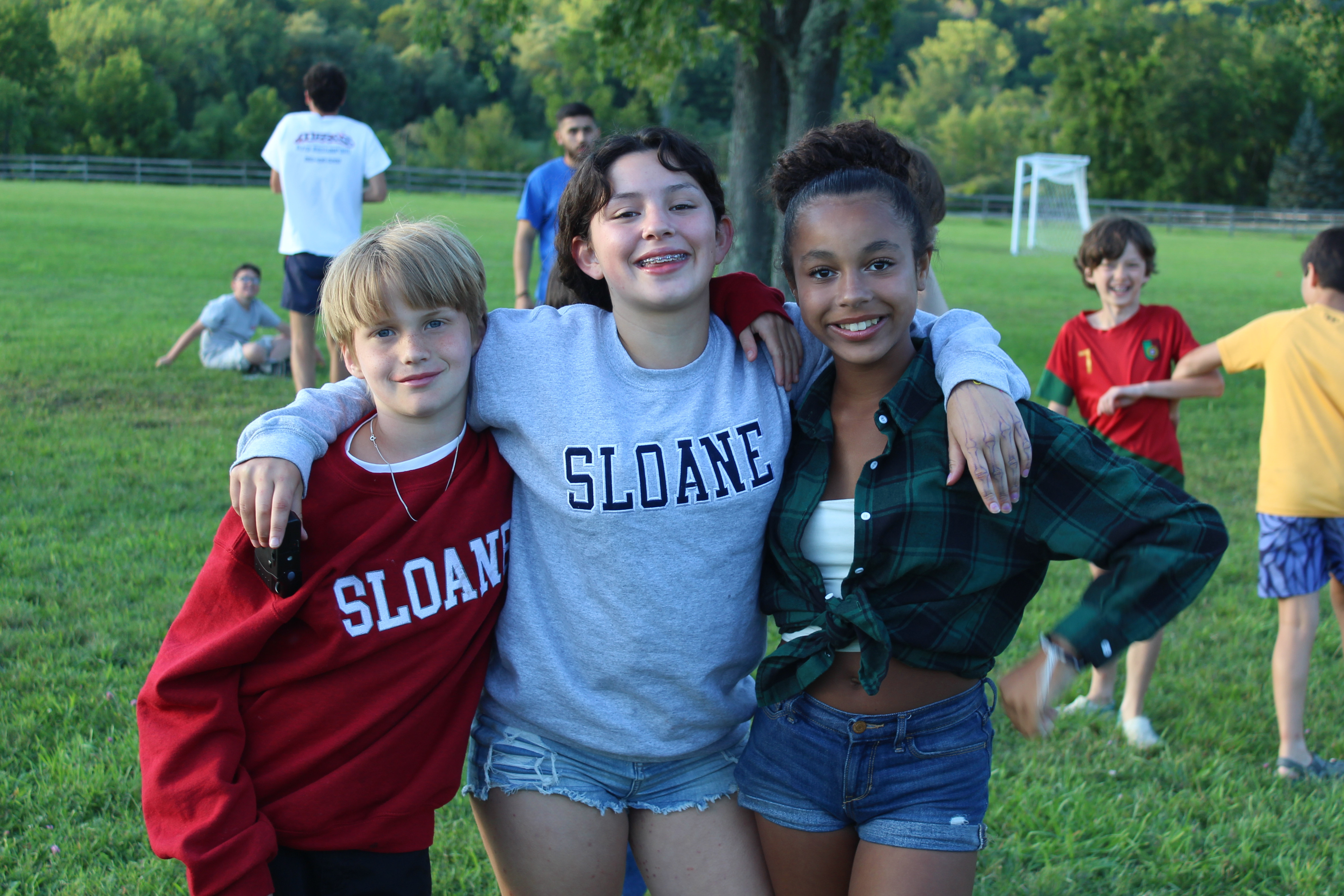
I also think that traditional camps like Sloane might be one of the last places where kids get to resist the pressure to specialize early.
During the school year, it’s easy for kids to get locked into tracks.
One sport all year round.
One instrument, start to finish.
Everything scheduled, everything focused.
And honestly, that’s totally fine. I get it.
Summer camp is different though. The camp program is intentionally designed to offer a wide range of, well, for lack of better word, stuff.
It used to be commonplace to run around, get up to a bunch of different things. Play different sports. Have different hobbies. But that’s become increasingly rare.
Camp is one of the few places left where kids might do arts & crafts right after playing soccer, right before sailing, which was right after improv class.
We’re not anti-excellence. We’re pro range.
That kid who only plays sports during the school year? Still an incredible athlete.
But at camp, they also got to be creative, collaborative, and curious about things that had nothing to do with sport.
At camp, we are trying to carve out opportunities and time for kids to do more, and specialize less.
You can play sports anywhere. You can find a climbing wall in most malls. You can swim at your local Y.
But at camp, kids get to do everything, try everything.
And they get to do it with their friends, in an environment that’s designed to provide a childhood that offers range.
A childhood a little bit like yours (and mine) was. Wouldn’t that be nice?
See you in Summer 2026,
Ru
Sign up here to receive these newsletters straight into your inbox!